
Thimo de Wolff
/ AI Engineer
Data Analyst

Skills

Over the years I've built up a wide coding skillset, mainly shaped by my studies in AI and game design.

I've now specialized in Python, building various applications and models. I also have experience with other languages and tools.

Projects

Project

IMDb category generalization

Python Scikit-learn NLTK Machine Learning

Predicting movie themes based on their metadata. Generalizing categories for better classification.
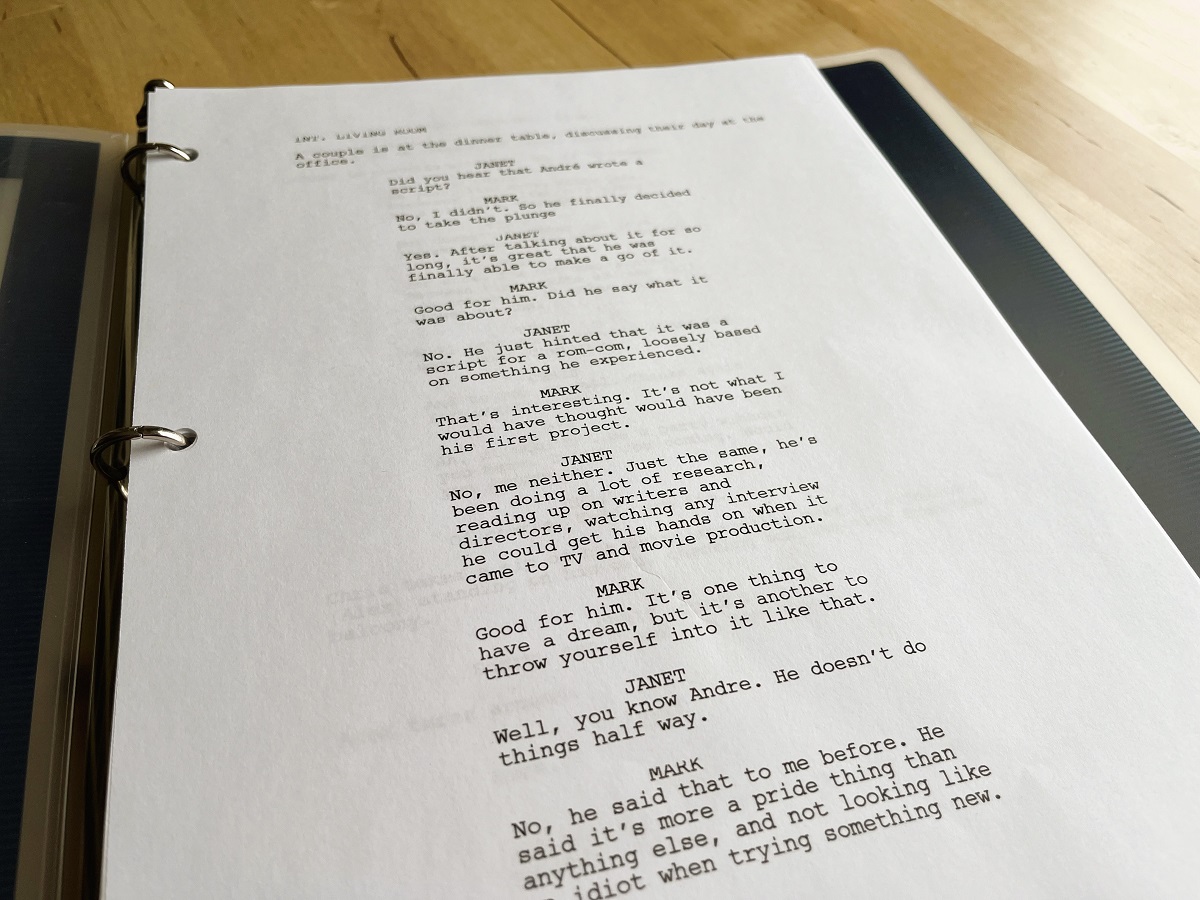
In this project I worked on one main task of theme prediction, with the specific subtask of generalizing movie categories for better classification. This would allow us to predict themes that are not explicitly mentioned in the metadata, but can be inferred from the movie's characteristics.

Workflow

1. Data Collection: I gathered a dataset of movies from IMDb, including metadata such as genre, plot summary, cast, and user ratings.

2. Data Preprocessing: I cleaned the data by handling missing values, normalizing text fields, and encoding categorical variables.

3. Feature Engineering: I created new features based on the existing metadata, such as the number of genres, average user rating, and presence of certain keywords in the plot summary.

4. Model Training: I trained various models using Scikit-learn to predict movie themes based on chosen features.

5. Evaluation: I evaluated the model's performance using metrics such as accuracy, precision, recall, and F1-score.

Tech Stack

Python: Used for data manipulation, feature engineering, and model training. Used various libraries such as Pandas, NumPy, and Matplotlib.

Scikit-learn: Mainly used sk-learn for building and evaluating machine learning models.

NLTK: Used for analyzing plot summaries, mainly to look for sentiment as well as keywords. Also used to combine themes that fit together.

Results

The testing of the models showed how difficult it actually was to predict movie themes accurately. The best performing model, which was XGBoost, achieved an F1-score of 0.55, which indicates that while the model was able to capture some patterns in the data, there is still room for improvement. The generalization of categories did help to improve the model's performance, as it allowed us to capture more nuanced relationships between the features and the themes. It increased the F1-score from 0.35 to 0.55, which is a significant improvement.

Project

TV Show Script Generation

Python NLTK

Generating TV show scripts using natural language processing. Using parsing methods to create unique dialogue.
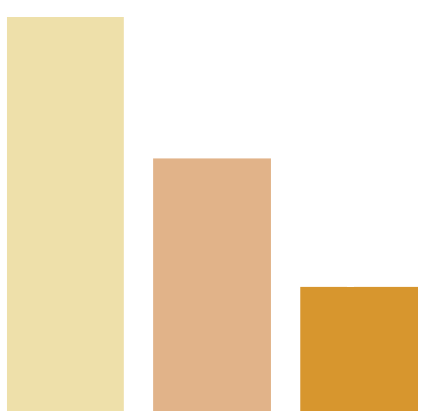
In this project I worked on generating TV show scripts using natural language processing techniques. I used various parsing methods to analyze existing scripts and create unique dialogue based on the sentence building of the data. The goal was to generate contextually working scripts, that could be recognized as normal sentences, from a small amount of data.

Workflow

1. Data Collection: We used web scraping to create a dataset of existing TV show scripts.

2. Data Preprocessing: I cleaned the data by by removing punctuation, filtering on what lines are from which persona, and creating a structured format that would be easy to parse.

3. Parsing: I used NLTK to parse the sentences in the scripts, looking at the structure of the sentences and how they were built (classifying word types, and probabilities of word appearances). I then created a model that could generate new sentences based on this structure.

Tech Stack

Python: Used for data manipulation as well as scraping of the scripts.

NLTK: Used for parsing and analyzing the text data. Calculating probabilities of word appearances based on the dataset. Classified each word based on its role in the sentence.

Results

The results of the project showed that while the generated scripts were not perfect, they were able to produce decent sentences. The model was able to capture character-specific language and sentence structure. However, there were still some issues with coherence and consistency in the generated scripts, which is an area for future improvement. For future work, I would like to explore more advanced language models, such as transformer-based models, to improve the quality of the generated scripts.

Project

Diabetes Data Analysis

Python Jupyter Notebook

Studying the effects of income class on diabetes. Full data analysis on income class, country wealth, as well as other factors.

This project involved analyzing multiple diabetes datasets to understand the relationship between income class and diabetes prevalence. I performed a broad data analysis, including data cleaning, exploratory data analysis, and statistical testing. The goal of this project was to identify any meaningful correlations between income class, country wealth, and other factors such as age, BMI, and lifestyle habits.

Workflow

1. Data Collection: I gathered several datasets containing information about diabetes patients and their socioeconomic backgrounds.

2. Data Preprocessing: I cleaned the data by handling missing values and normalizing numerical features.

3. Exploratory Data Analysis: I visualized the data to understand its distribution and identify any patterns or outliers.

4. Statistical Testing: I did various statistical tests to determine the significance of the relationships between variables.

Tech Stack

Python: Used for data manipulation. Used various libraries such as Pandas, Plotly, Seaborn, and more.

Jupyter Notebook: Used for experimentation and visualization of the data analysis.

Analysis Results

The analysis revealed a big correlation between income class and diabetes prevalence, with lower-income groups showing higher rates of diabetes. Additionally, country wealth was also found to be a contributing factor, with wealthier countries generally having better healthcare access and lower diabetes rates. Other factors such as age and BMI were also found to have high impact on diabetes risk.

Project

Discord Producer Tags

Python

A Discord bot that gives producer tags and plays them whenever you join a voice channel.
This is one of my passion projects. I created a script that lets users set their producer tag through a discord bot, and then play that tag whenever they join a specified voice channel. Future additions to the project will include text to speech functionality, as well as the ability to set different tags for different channels or servers.

Workflow

1. Bot Creation: I created a Discord bot using the Discord.py library and set up the necessary permissions in the discord developer portal.

2. Tag Management: I implemented a bot function for users to set their unique producer tags, which are stored in a json file.

3. Determining Voice Channel: I added functionality to set the voice channel where the bot will play the producer tags.

Tech Stack

Python: Used for creating the Discord bot and handling the backend logic.

Discord.py: Used for creating the Discord bot.

Project

Deepspeech Keyword Spotting

Speech Recognition Machine Learning Pytorch

Creating a speech recognition model that can identify keywords based on their MFCC's

In this project I create a pipeline that takes short .mp3 or .wav files, resamples them and extracts their MFCC's (Mel-Frequency Cepstral Coefficients), which are then used to train a Convolutional NN.

Workflow

1. Dataset Download: I downloaded and organized the Google Speech Commands v0.02 dataset.

2. Feature Extraction: I made an MFCC extraction pipeline to transform raw audio into compact spectral features with reduced noise suitable for machine learning.

3. Dataset Preparation: I split the data into train, validation, and test splits to feed the model.

4. Model Architecture: I built a Convolutional Neural Network (CNN) specifically designed to classify the MFCC-based feature maps.

6. Training & Evaluation: Finally I trained and evaluated performance using accuracy and a confusion matrix to find the model strengths and weaknesses.

Tech Stack

Python: Used for basic scripting, and importing Machine Learning and data manipulation/visualization modules.

Pytorch: Used to create and train the model.

Scikit-learn: Used for the confusion matrix visualization, as well as the classification-report.

Jupyter Notebook: Used for a nice workflow as well as visualization of the data and results.

Results

The CNN achieved a validation accuracy of ~84% after 10 epochs, with a training accuracy of 90%, indicating a reasonable fit without severe overfitting. The precision and recall scores, which both average at 0.85 respectively, suggest that the model performs consistently across most keywords, though certain classes (such as “go” and “down”) show lower recall.
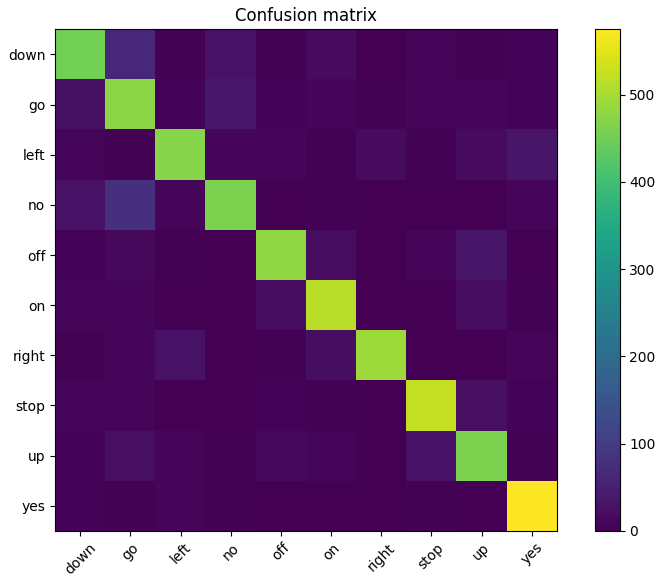
Confusion Matrix

The confusion matrix reveals that most misclassifications occur between acoustically similar words (e.g., "no", "go" and "down", or "up" and "off"), which is expected in short speech segments.
Project

CV Website (this website)

HTML Java Script

A website that displays my skills, experience, and some of my career projects.
The purpose of this website is to create a smoother transition between my CV and my coding projects. Where normally my CV and projects would be reviewed separately, they're now in the same place. I can now easily share new projects and their results in a way that feels closely tied to my brand.

Website Workflow

1. UI/UX Design: I created a modern looking interface with a focus on smooth scrolling and a responsive layout.

2. Frontend Architecture: I built the core structure using HTML.

3. Interactivity & Animations: I used the GSAP library (GreenSock Animation Platform) to handle scroll-triggered animations between sections.

4. Scripts: I wrote JavaScript logic to manage state, scroll calculations, form submissions, and much more.

Tech Stack

HTML: Used for creating the base layout.

CSS: Used to further improve the layout as well as do styling for each element.

JavaScript: Used for the logic behind transitions, scrolling logic, a navigation bar in the header, a dynamic sliding bar for the projects section, the sending of emails through the website, and a lot of button logic.

Scroll down

Thimo
de Wolff

AI Engineer
Data Analyst

Hi

Wanna take a look at what I made?

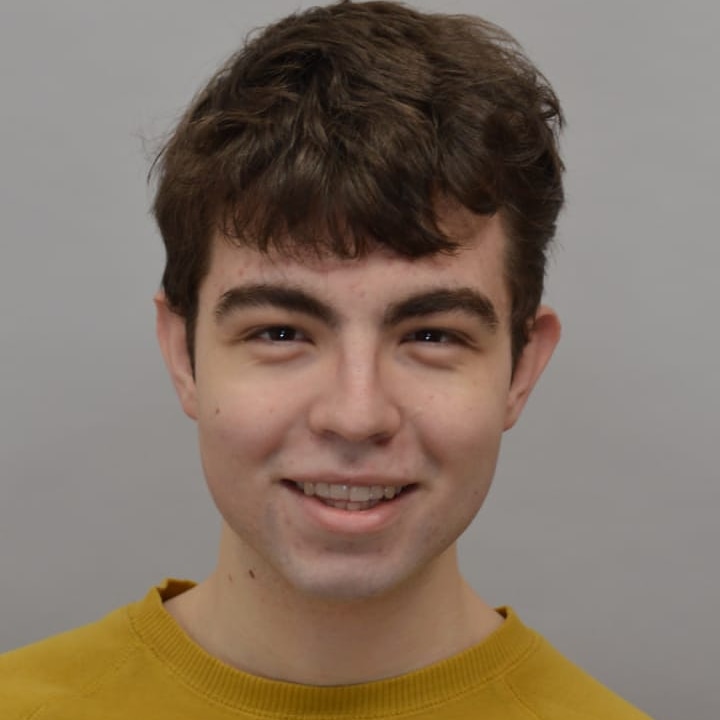
I’m Thimo, a 3rd year AI student at the University of Amsterdam.
I enjoy writing code, building websites/games, analyse data to find
hidden patterns, and build predictive models using machine learning.

Learn something about me, or immediately take a tour through my work
and see what I’ve been up to!

Expert
Python TensorFlow PyTorch Machine Learning
Experienced
Data Analysis SQL Git NLP
Familiar
Docker JavaScript Blender React

Mindset

Teamwork Creativity Problem Solving Curiosity

Languages

Dutch Native
English Fluent (C1)
German Intermediate

Education

2023 - Present

WO BSc Artificial Intelligence

University of Amsterdam

2021 - 2023

HBO BSc Game Design

Hogeschool van Amsterdam

2014 - 2020

HAVO Science & Engineering track

SG de Rietlanden

Experience

2023 - Present

Technical Tutor

Mathematics - Self employed

2019 - 2023

Team Member

Aldi Bv.